
Abstract
When identifying solutions that can offer assurance and longevity, the maintenance and reliability of asset repairs can be challenging, this white paper will look into the use of structural adhesives as the first-choice solution.
Structural adhesives, particularly metal bonding epoxy systems can be used for affixing metal substrates or components as they provide high modulus and high strength. However, they are not currently internationally recognised like the traditional methods even though industrial adhesives are already used in a wide range of industries, such as aerospace, rail, and construction.
Traditional practice such as welding, riveting, nuts and bolts and mechanical fixing are perceived as the go to method. However, they all have their inherent inadequacies. Welding can be hazardous to health, riveting, nuts and bolts concentrate the stress locally while mechanical fasteners can concentrate stress.
This paper introduces a novel, two-component, solvent-free metal bonding epoxy structural adhesive that provides high adhesion to metallic substrates while also being able to withstand high movement or cyclic fatigue in comparison to general epoxy materials.
As well as potential application areas, the article also discusses a number of benefits, including ease of use, load bearing and impact resistance properties.
Strengthening the Bond with Reliable Structural Adhesives
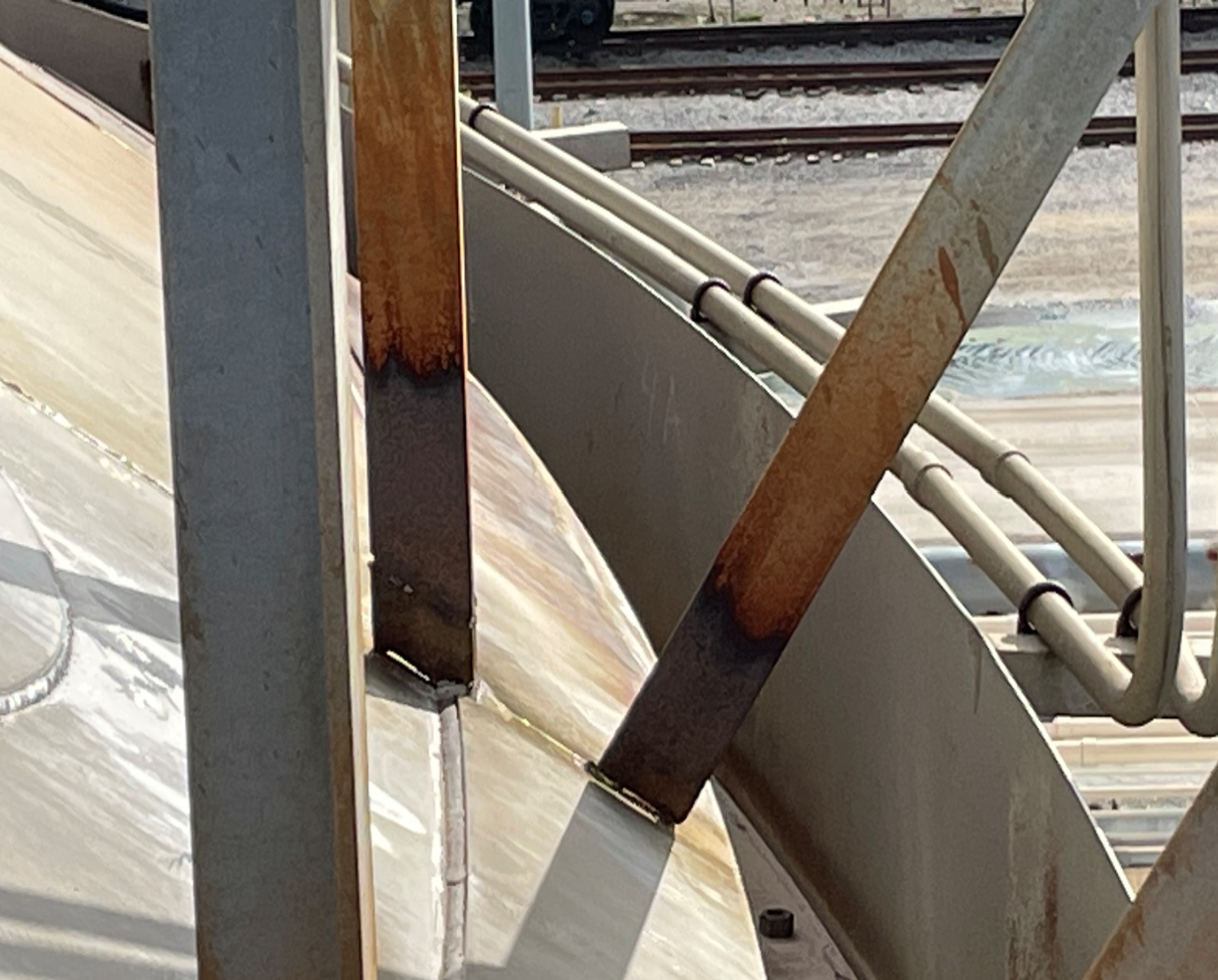
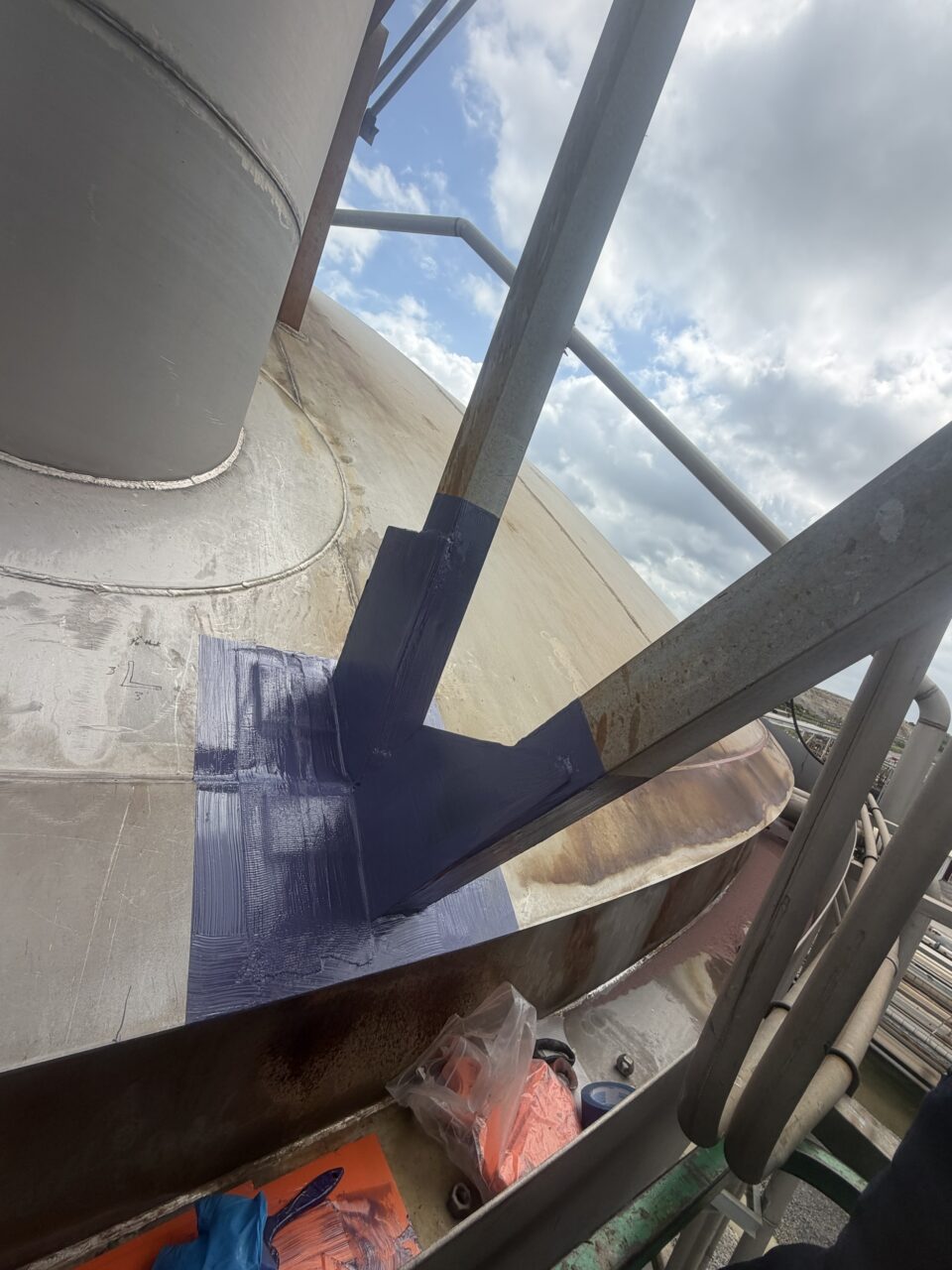
Most industrial maintenance or repair procedures can either involve welding or use of mechanical fasteners as these can be perceived as easy and quicker, however, these procedures might initially seem to correct the issue but may cause more harm than good. Depending on the repair situation for instance welding or drilling to connect mechanical fasteners on a storage tank containing flammable liquid is not recommended for obvious reasons this is where a structural adhesive, specifically a high-performance metal bonding epoxy, can really offer a solution for that maintenance repair.
There are many structural fixings used across a whole range of industries that may be part of any maintenance or repair, these include support brackets such as cable trays, antennas, heating coils filter pans or any other internal fixtures in vessels that suffer from corrosion, impact or vibration damage. Many of these applications can now be repaired using modern industrial adhesive technology, reducing downtime while maintaining structural integrity. Within construction there are fire water deluge systems, nozzles connections, facades panels and signs which can require maintenance overtime or adverse weather conditions.
Process equipment or piping can suffer from thinning or the steel or even through wall defects which will need either monitoring or repairing depending on whether the integrity of the equipment has been lost.
Structural fittings are generally for fixing of static members but may be subjected to forces unbeknown at time of installation this could include thermal cycling of the joints, cyclic loading or vibration due to fatigue of a component.
If there are repairs due to the above, the contractor may be in a situation where a choice of solution can be made, then the strengths and weaknesses need identifying.
Welding is regularly used for repairs as it is widely available while being well regulated with high customer confidence and high strength of the repair it does come with its inherent risks both the use, the material by heat stressing and the user as welding can cause both acute and chronic health risks [1]. Application of welding repairs onto live piping sections, storage tanks or process systems and equipment should not be undertaken due to the high temperatures involved and not forgetting the combustible nature of the process fluid or gas running through or being stored in these components.
Bolted joints are seen as simple and low cost due to the ease of disassembly and reassembly and these can be dissimilar metals, but the use of dissimilar metals will contribute to galvanic corrosion, add weight to the joint, requiring routine inspection and tensioning while the drilled holes in the support material, stress distribution is not uniform and concentrated at the holes.
Structural adhesives have high bond strength whilst being lightweight, adhesive applied to cover the entire joint, resulting in uniform stress distribution, reducing metal distortion under strain.
Importance of Structural Adhesive Bonding
Structural adhesive bonding is the joining of similar or dissimilar members together while creating permanent high strength bonds which can transfer structural stress without loss of structural integrity.
Regardless of the joint type used, it is important to understand the different stresses that are imparted onto a bonded assembly. Metal bonding adhesives perform the best when the stress is two-dimensional to the adhesive, allowing the force to be applied over the entire bond area.
Joints that are well designed for adhesives place most of the stress into compression or shear modes, adhesives perform the worst when stress is one-dimensional to the adhesive, concentrating the load onto the leading edge of the bond line. Joints placing stress into cleavage or peel concentrate the stress onto the leading edge, which may lead to premature bond failures, especially if subjected to vibration, impact or fatigue
Bonds of high strength are obtained after cleaning of the substrate by removal of any contaminants followed by the roughening of the substrate generally in the form of grit blasting to international recognised standards [2]. Proper surface preparation is critical for achieving maximum performance from any metal bonding epoxy or structural adhesive, regardless of the application.
There are three types of bonding that are important to achieve to ensure good adhesion. These are adhesive, chemical, and Mechanical.
Adhesive relies on surface energy to generate adhesion to the substrate. While chemical relies on chemical bond formation and electronic bonding to produce adhesion. Mechanical adhesion is due to the creation of an irregular profile that allows a deeper profile to be produced.
The types of structural adhesives available have been summarised in Table 1
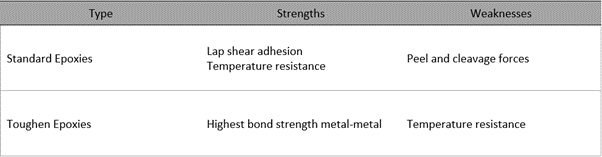
Understanding the failure mechanisms of a structural adhesive is essential when designing reliable bonded joints for industrial applications. There are two types of failure mechanisms associated with structural adhesives:
1. Cohesive failure occurs in the bulk layer of the adhesive material. This failure mode is limited by the strength of the adhesive material and can be caused by insufficient curing of the adhesive and applications at a greater thickness than that recommended among others.
2. Adhesive failure occurs when the mechanical adhesion between the adhesive and the parts being joined is overcome by the loading. This failure mode is associated with inadequate surface preparation, presence of contaminants, or insufficient curing of the adhesive among others.
Structural Adhesive Development
Belzona 7311 was developed as a high-performance metal bonding epoxy designed to meet the requirements of structural repairs across multiple industries. As a two-component structural adhesive, its development focused on achieving high adhesion, fatigue resistance and long-term durability.
Design considerations for Belzona 7311 were based on both technical target requirements and a practicality approach, as summarised in Table 2.
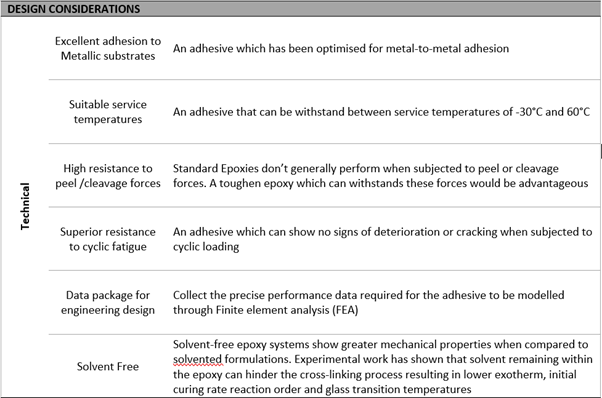
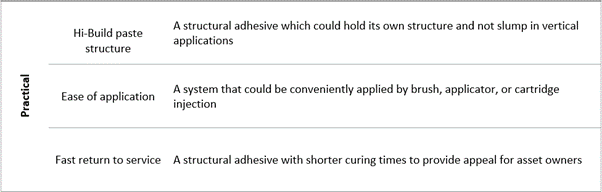
Belzona 7311 was subjected to at least the following tests and evaluation protocols in to ensure that it met the design criteria previously discussed. Where possible, internationally recognised standards were used.
- Cleavage Adhesion – ASTM D1062 [3]
- Tensile Shear Adhesion – ASTM – D1002 [4]
- Tensile Fatigue Resistance – ISO 9664 [5]
- Impact Resistance – ASTM D256 [6]
Bibliography
1. https://www.hse.gov.uk/welding/health-risks-welding.htm
2. ISO 17212:2012 Structural adhesives — Guidelines for the surface preparation of metals and plastics prior to adhesive bonding
3. ASTM D1062-08(2015) Standard Test Method for Cleavage Strength of Metal-to-Metal Adhesive Bonds
4. ASTM D1002-10(2019) Standard Test Method for Apparent Shear Strength of Single-Lap-Joint Adhesively Bonded Metal Specimens by Tension Loading (Metal-to-Metal)
5. ISO 9664:1993
6. Adhesives — Test methods for fatigue properties of structural adhesives in tensile shear
7. ASTM D256-10(2018) Standard Test Methods for Determining the Izod Pendulum Impact Resistance of Plastics
What is a structural adhesive?
A structural adhesive is a high-strength bonding material designed to join similar or dissimilar substrates while transferring structural loads without compromising the integrity of the bonded assembly. Structural adhesives are commonly used in industrial applications where durability, fatigue resistance and long-term performance are required.
What is a metal bonding epoxy?
A metal bonding epoxy is a two-component adhesive designed to bond metallic substrates. These materials provide high adhesion, excellent mechanical properties and resistance to environmental conditions such as vibration, impact and chemical exposure, making them suitable for industrial maintenance and repair applications.
How do structural adhesives compare with welding?
Welding remains a widely accepted joining method for many applications; however, it introduces heat into the substrate, which may not be suitable for every repair. A structural adhesive provides a cold-applied alternative that eliminates hot work, distributes loads more uniformly across the bonded area and reduces the potential for stress concentrations associated with welded joints.
Click on the following link to read PART TWO of the technical article.
Contact Your Local Distributor to Learn More About Structural Adhesives

Having joined Belzona in 2010, Ian Wade has cultivated a deep expertise in corrosion, coatings, and inspection services. Currently serving as the Technical Services Manager at Belzona’s headquarters in Harrogate, Ian has held various roles. These include Technical Services Engineer and Training Facility Team Leader, where he managed the day-to-day operations of the training facility and collaborated closely with technical and business development teams.
Ian’s professional journey has taken him across the UK and international waters, including stints in South Korea, China, the North Sea, and the Caspian Sea, performing both supervisory and hands-on inspection work. His practical experience extends to on-site applications using Graco spray pumps and hand-applied coatings, directly enhancing operational standards and safety.
Ian is an AMPP (NACE) Certified Coating Inspector Level 2 and is currently advancing his knowledge by pursuing a Bachelor of Engineering in Mechanical Engineering part-time at The Open University, expected to complete in 2027. He has written a number of technical articles including: Strengthening the Bond with Reliable Structural Adhesives and The Benefits of Protecting Storage Tanks with Sprayable, Polymeric Coatings. His commitment to technical excellence and his robust experience make him a valued leader and innovator in his field.


