Screw conveyors operating in industries such as mining, quarrying, cement, and bulk material handling are exposed to severe abrasive wear. Applying an abrasion resistant coating can help restore worn surfaces, improve abrasion resistance, and extend the service life of equipment operating in demanding environments.
Without suitable protection, continuous contact with abrasive materials can cause surface degradation, increasing maintenance requirements, reducing operational efficiency, and leading to unexpected downtime.
Selecting the correct protective solution is essential for maintaining equipment reliability. High-performance abrasion resistant linings and coatings are designed to withstand different wear mechanisms, helping protect critical assets against severe abrasion.
What Causes Abrasive Wear in Screw Conveyors?
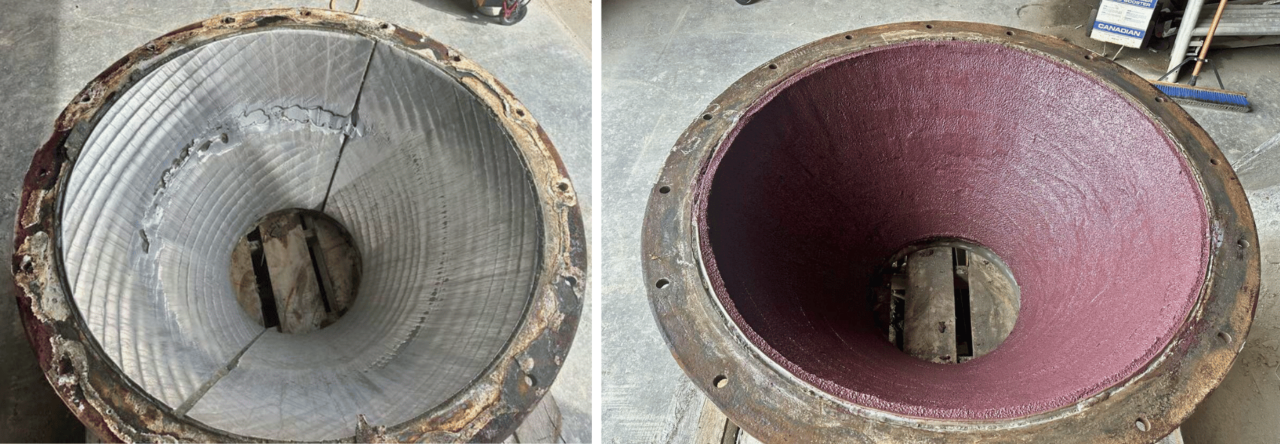
Screw conveyors are exposed to continuous wear as abrasive materials move through the system. Repeated contact can gradually remove material from the surface, reducing equipment performance and increasing maintenance requirements.
The type and severity of wear depend on the size and hardness of the particles being transported:
- Coarse particle abrasion occurs when larger, heavier particles repeatedly impact and slide against the surface, causing aggressive material removal.
- Fine particle abrasion involves smaller particles and requires a different protective approach.
Belzona provides solutions for both:
- Belzona 1811 (Ceramic Carbide) provides high abrasion resistance for applications exposed to coarse particle abrasion and severe sliding wear.
- Belzona 1812 (Ceramic Carbide FP) is designed for applications involving fine particle abrasion.
Without effective protection, abrasive wear can lead to surface damage, reduced equipment performance, and premature component failure. Product selection should also consider factors such as particle hardness, velocity, impact, temperature, chemical exposure and the overall wear mechanism.
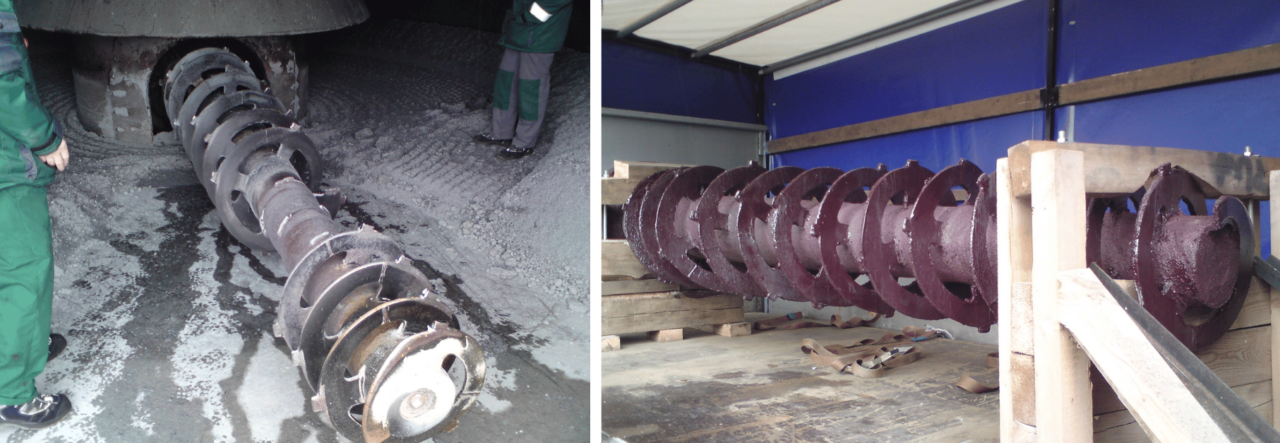
The following section demonstrates how to repair and protect a screw conveyor exposed to severe abrasion using Belzona 1811 (Ceramic Carbide).
Step-by-Step Guide: How to Protect a Screw Conveyor with an Abrasion Resistant Coating
Step 1: Prepare the Surface
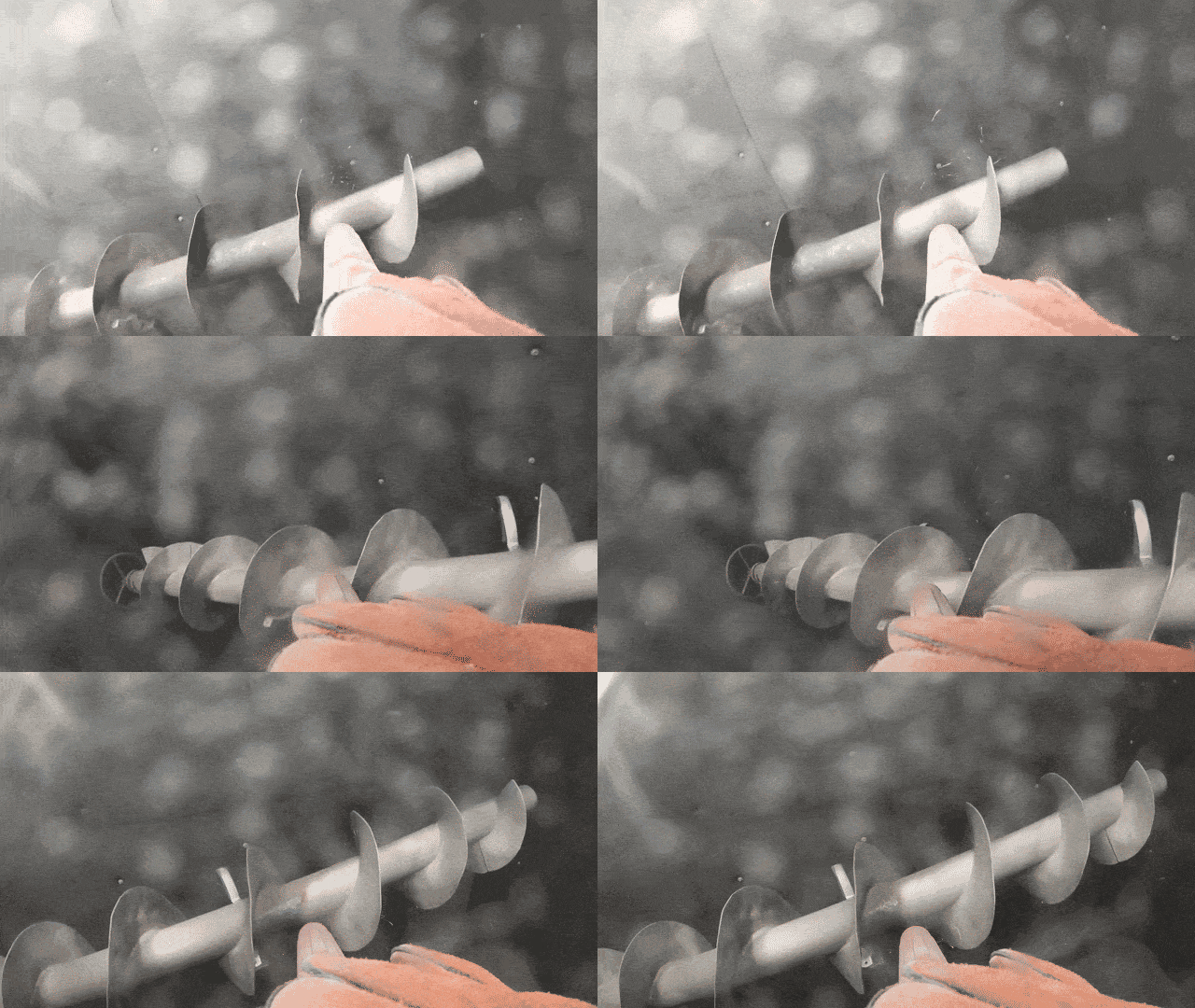
Prepare the surface to achieve optimal adhesion:
- Grit blast the substrate to the requirements of SSPC-SP10 (Near White Metal Blast Cleaning)
- Remove any loose debris from the prepared surface
- Clean the application area using a suitable cleaner/degreaser
Step 2: Mix Belzona 1811 (Ceramic Carbide)
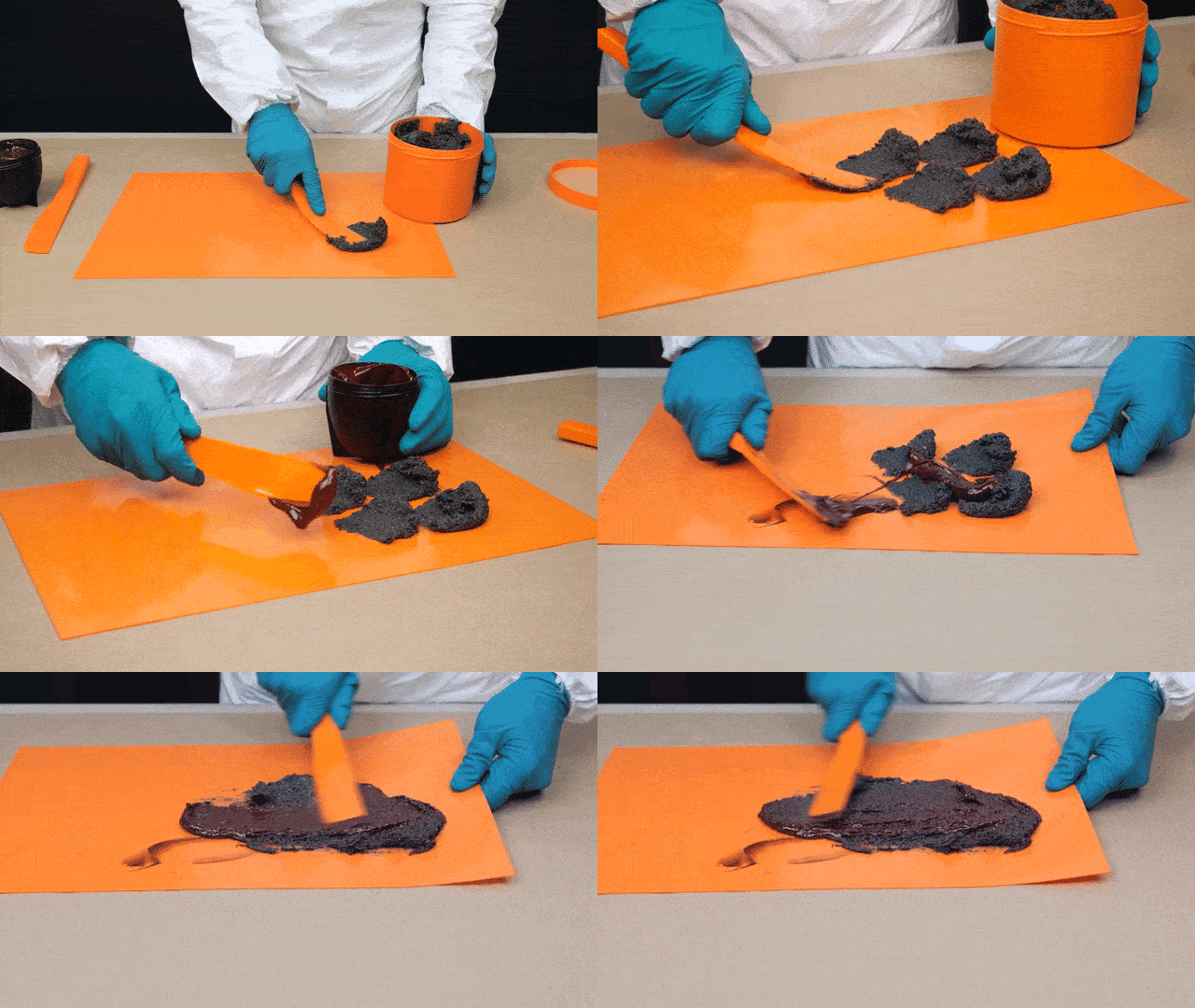
Belzona 1811 (Ceramic Carbide) is a two-component abrasion resistant coating designed to protect surfaces exposed to severe wear.
Mix the material until a uniform, streak-free consistency is achieved.
- Mix at a volumetric ratio of 4 parts base to 1 part solidifier
- For larger applications, use the supplied measuring containers to achieve the correct ratio
For full details, please refer to the Instructions for Use.
Step 3: Apply the Abrasion Resistant Coating
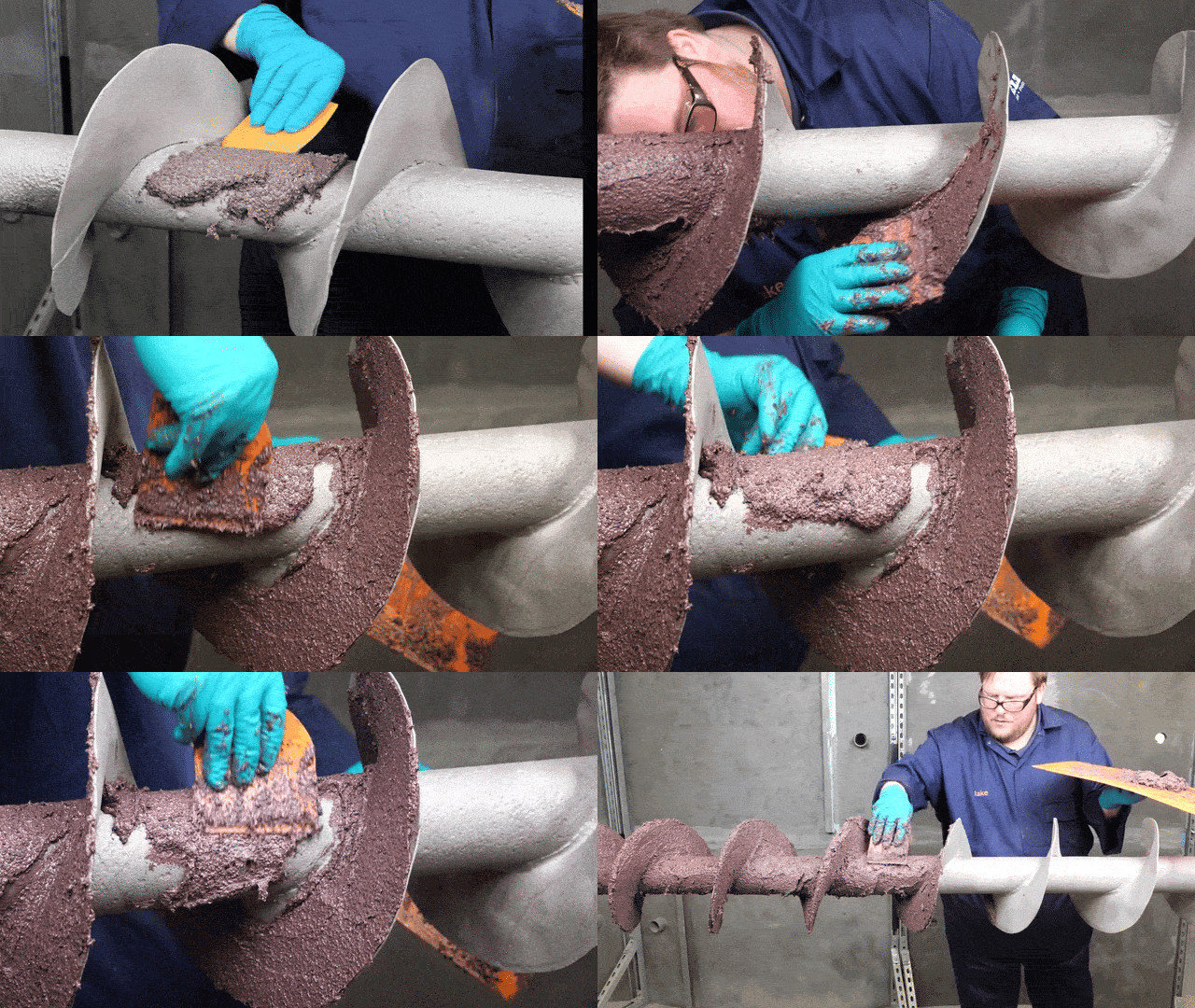
Apply Belzona 1811 (Ceramic Carbide) directly onto the prepared surface.
- Press down firmly using a Belzona applicator to ensure sufficient contact with the substrate and reduce the risk of voids
- Apply the coating at a thickness of 6 mm (¼ inch)
- Work in manageable sections while maintaining a wet edge
Step 4: Contour the Coating Profile
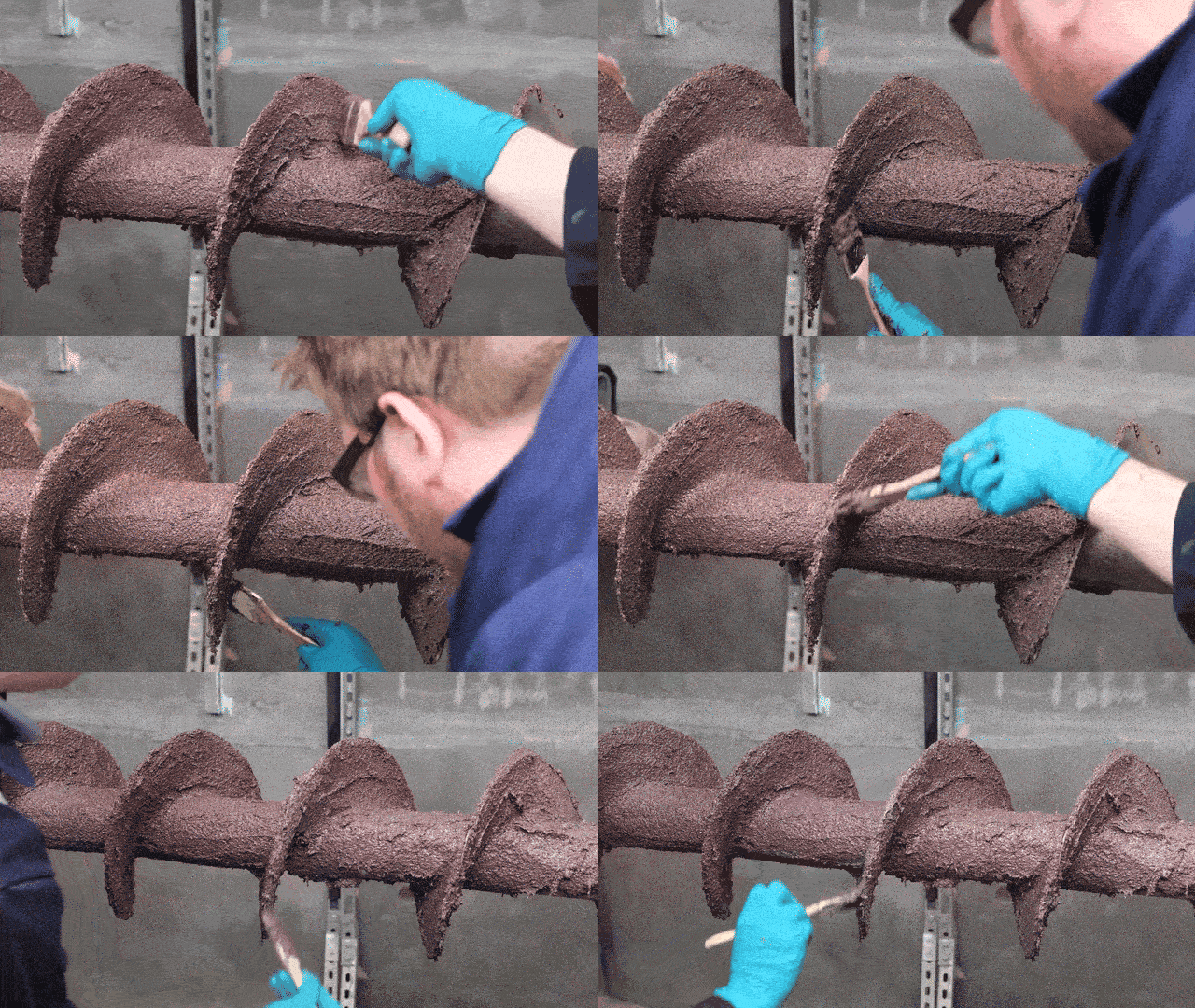
Use a short-bristled brush to tamp down the applied material and contour it to the shape of the screw conveyor.
This helps to:
- Eliminate air pockets
- Achieve an even surface profile
- Identify and correct any missed or thin areas
Maintaining a consistent profile helps maximise the performance of the abrasion resistant coating system.
Step 5: Allow to Cure
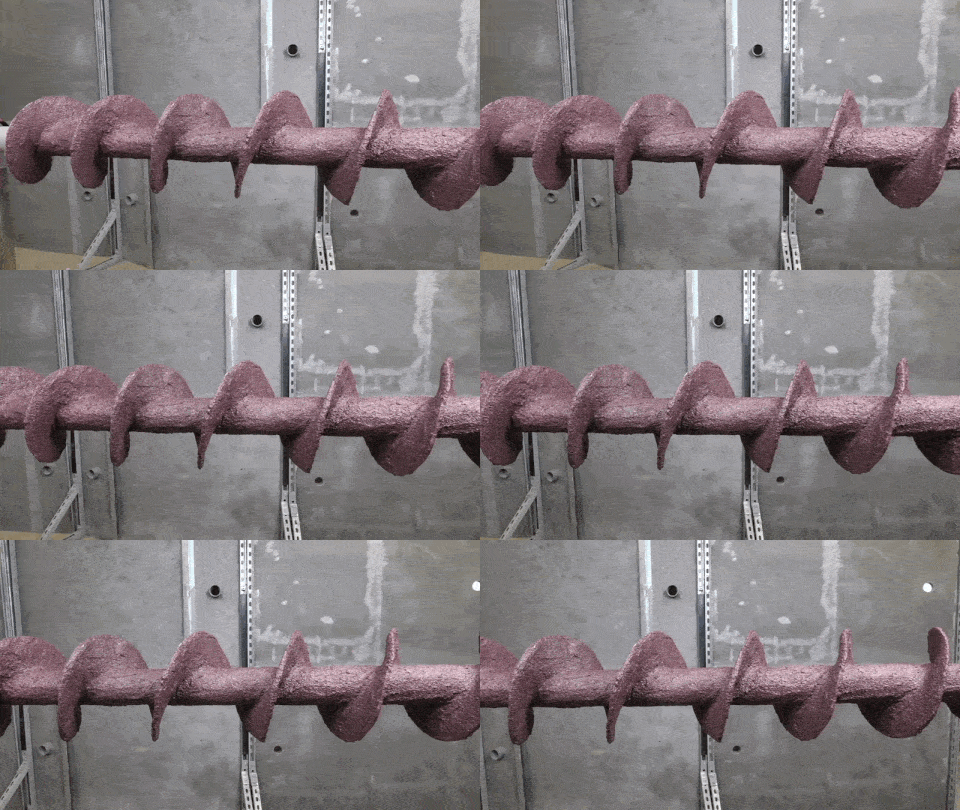
Allow the applied material to cure before returning the equipment to service.
Once cured, Belzona 1811 (Ceramic Carbide) provides a durable protective barrier designed to withstand demanding abrasive environments.
Step 6: Completed Repair
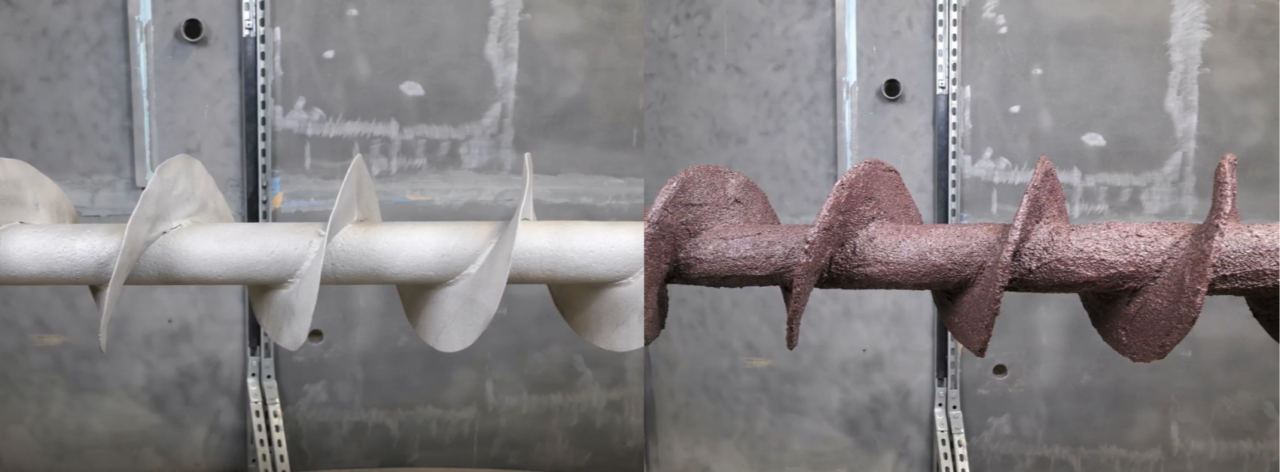
The completed repair restores the worn surface and provides long-term protection against abrasive wear.
By applying an abrasion resistant coating, screw conveyors can continue operating in demanding environments while reducing maintenance requirements and extending equipment service life.
Video: Abrasion-resistant protection for screw conveyors
FAQs
What is the difference between coarse and fine particle abrasion?
Coarse particle abrasion involves larger particles that create aggressive sliding wear and impact damage, while fine particle abrasion is caused by smaller particles that create a different wear mechanism. The most suitable abrasion resistant solution will depend on the type of material and service conditions.
For coarse particle abrasion, Belzona 1811 (Ceramic Carbide) provides high abrasion resistance for severe sliding wear applications. For fine particle abrasion, Belzona 1812 (Ceramic Carbide FP) is designed to provide protection against finer abrasive particles.
What is an abrasion resistant coating?
An abrasion resistant coating is a protective material designed to withstand wear caused by repeated contact with abrasive materials. Belzona provides abrasion resistant coatings and composites designed to protect industrial equipment from different types of abrasive wear, helping extend service life and reduce maintenance requirements.
What causes abrasion in screw conveyors?
Screw conveyors are exposed to continuous frictional contact between moving bulk materials and the conveyor’s internal metal surface, which can cause progressive surface wear. Where larger, harder particles are involved, coarse particle abrasion can result in severe material loss. Belzona 1811 (Ceramic Carbide) provides high abrasion resistance for applications exposed to severe sliding abrasion.
Can abrasion resistant coatings replace wear liners?
Depending on the application, abrasion resistant coatings can provide an alternative to traditional abrasion resistant linings. Belzona solutions can be applied directly to prepared surfaces to rebuild and protect worn components, avoiding the need for mechanical fastening of traditional wear liners in some applications. The most suitable solution will depend on the equipment design, wear mechanism, and service conditions.
Which Belzona product is suitable for abrasive wear?
The most suitable Belzona solution depends on the type and severity of abrasion. Belzona 1811 (Ceramic Carbide) is designed for severe wear involving coarse particle abrasion, while Belzona 1812 (Ceramic Carbide FP) is designed for fine particle abrasion applications. Consult your local Belzona Authorised Distributor to identify the most appropriate solution for your service conditions.
Learn More
- How to Apply a Durable Abrasion Resistant Coating System
- Mining and Quarrying: Top 5 Application Areas
- Watch: How to Repair an Abrasion Resistant Lining with Belzona
Contact Your Local Distributor to Learn More About Belzona Solutions for Abrasion

Content Creator, Belzona Inc., Harrogate, UK.
Responsible for writing a range of content including blog posts, press releases and a range of marketing material.