
When a structural component fails on an industrial site, the instinct is often to call for a welder. But welding isn’t always possible; hot work permits, confined spaces, live equipment, or corrosion-weakened base metal can all rule it out. That’s where composite structural repair comes in: cold-applied systems that restore load-bearing strength, seal cracks, and rebuild worn or damaged components without heat, sparks, or extended downtime.
Structural repair covers a wider range of applications than most people expect. Below are seven of the most common applications, along with a look at what makes each a good fit for a composite-based approach.
1. Stair Handrails and Guardrails
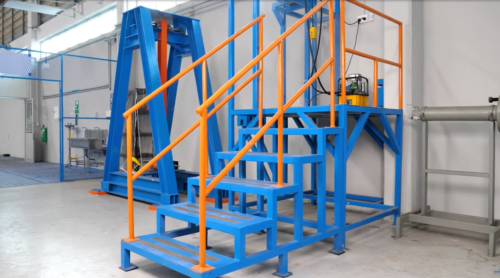
Handrails take a constant low-level beating: corrosion at weld points, impact damage from moving equipment, loosened base plates. Because handrails are safety-critical but rarely load-tested to destruction, a repair composite can restore rigidity at a corroded joint or cracked baseplate without cutting out and re-welding the whole section, which is useful when the rail can’t be taken out of service for long.
2. Structural Repair of Pipe Supports
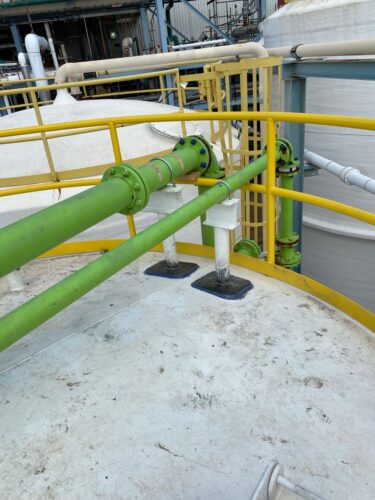
Pipe supports and hangers corrode from the outside in, often at the exact point where the pipe rests on the support, a spot that’s awkward to weld without disturbing the pipe itself. Structural repair here typically means rebuilding the worn saddle or support face with a load-bearing epoxy composite such as Belzona 7311, restoring the original profile and bearing surface without needing to lift or realign the pipe.
3. Walkways and Grating
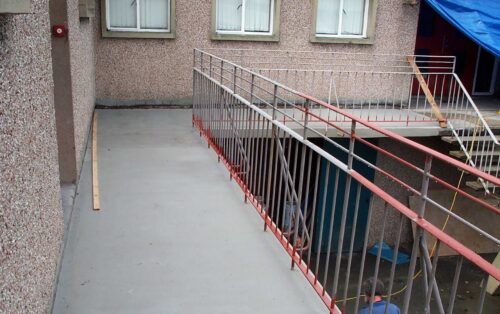
Elevated walkways see foot traffic, vibration, and heavy corrosion in chemical-processing sites, on the support beams underneath. Composite structural repair can rebuild corroded support brackets in place, which matters when the walkway can’t be shut down without disrupting access across the whole site. Where walkways are supported on concrete, Belzona concrete repair systems can also rebuild spalled or damaged concrete, restoring its load-bearing function rather than simply patching the surface.
4. Structural Steel Repair (Beams, Columns, Frames)
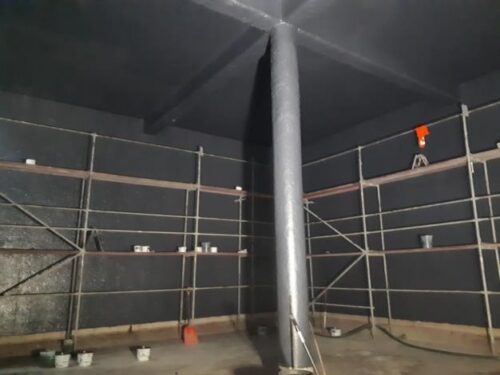
This is the broadest category: corroded flanges, thinned webs, cracked welds, and impact damage on primary steel members. Composite repair systems are generally best suited to localized section loss and corrosion rather than full structural failure. A qualified structural engineer should always assess the extent of damage first, but for many corrosion cases, structural steel repair with epoxy composites avoids hot work entirely.
5. Platforms and Access Structures
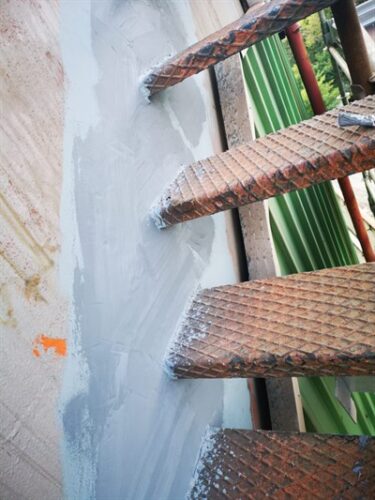
Similar to walkways, platforms often show localized corrosion at support brackets, stair stringers, or baseplates rather than failure across the whole structure. Targeting the damaged section with a structural repair composite avoids the cost and downtime of fabricating and installing a replacement section.
6. Equipment Mounting and Baseplates
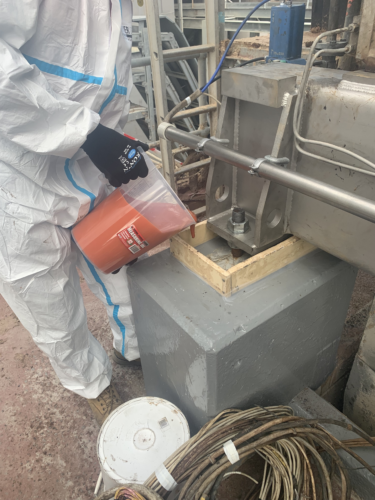
Machine bases and equipment mounting plates take repeated vibration and load cycling, which can crack the concrete or steel base beneath rotating equipment like pumps and motors. Structural repair here often combines a rebuild of the mounting surface with a load-bearing epoxy grout, restoring alignment and preventing the equipment from working loose again.
7. Structural Reinforcement of Ageing Assets
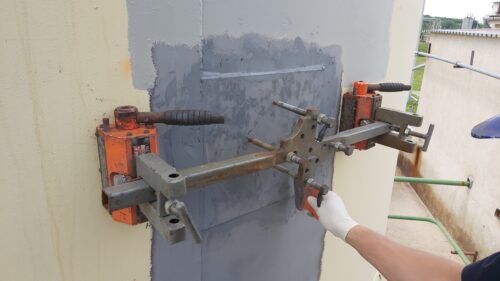
Sometimes the goal isn’t repairing damage but reinforcing a structure that’s approaching the end of its design life, adding strength to a corroding tank wall, a thinning pipe, or an ageing support frame before a failure occurs. Structural reinforcement composites are applied proactively here, extending asset life without a full structural replacement.
Choosing the Right Structural Repair Approach
Not every structural repair is a candidate for composites. Extensive structural steel loss, safety-critical failures, or damage beyond a certain threshold may still require replacement or welding, ideally verified by a structural engineer’s assessment. But for the corrosion, wear, and localized damage that make up the majority of day-to-day maintenance requests, cold-applied structural repair offers a faster, no-hot-work alternative that keeps assets in service.
Frequently Asked Questions
What is structural repair composite made from, and how does it work?
Structural repair composites are typically resin-based epoxy systems used for structural bonding, rebuilding, reinforcement, or load transfer and applied cold, directly onto the damaged component. Depending on the system, they can bond, rebuild, reinforce, or provide load-bearing support to steel, concrete, or other substrates, restoring strength to corroded or worn sections without heat or welding.
Is cold-applied structural repair as strong as welding?
For localized corrosion, section loss, and wear, a properly specified structural repair composite can meet or exceed the load-bearing performance of the original component. It isn’t a substitute for welding in every case, but for structural steel repair, equipment mounting and mounting plates, and pipe supports, cold-applied composites are widely used precisely because they restore strength without the restrictions that come with hot work.
What does the structural repair application process involve?
Most structural repair composite systems follow a similar sequence: the damaged area is cleaned and prepared to remove corrosion or contamination, the composite is mixed and applied by hand or trowel to rebuild the worn profile, and it’s left to cure at ambient temperature- no torches, grinders for hot work, or specialist welding equipment required. Depending on the size of the repair, structural steel repair or pipe support work can often be completed and back in service within a single shift.

Digital Content Creator, Belzona Inc., Miami, Florida



Can I have details video on the application
Hello, thank you for your comment. If you are interested in viewing informative application videos created by Belzona, please visit our YouTube channel, https://www.youtube.com/@belzona. Here, you will find dozens of videos with detailed step-by-step guides on how to complete different repairs. If you are interested in purchasing Belzona products, please visit http://www.belzona.com to find your local Belzona Distributor.