Oveview
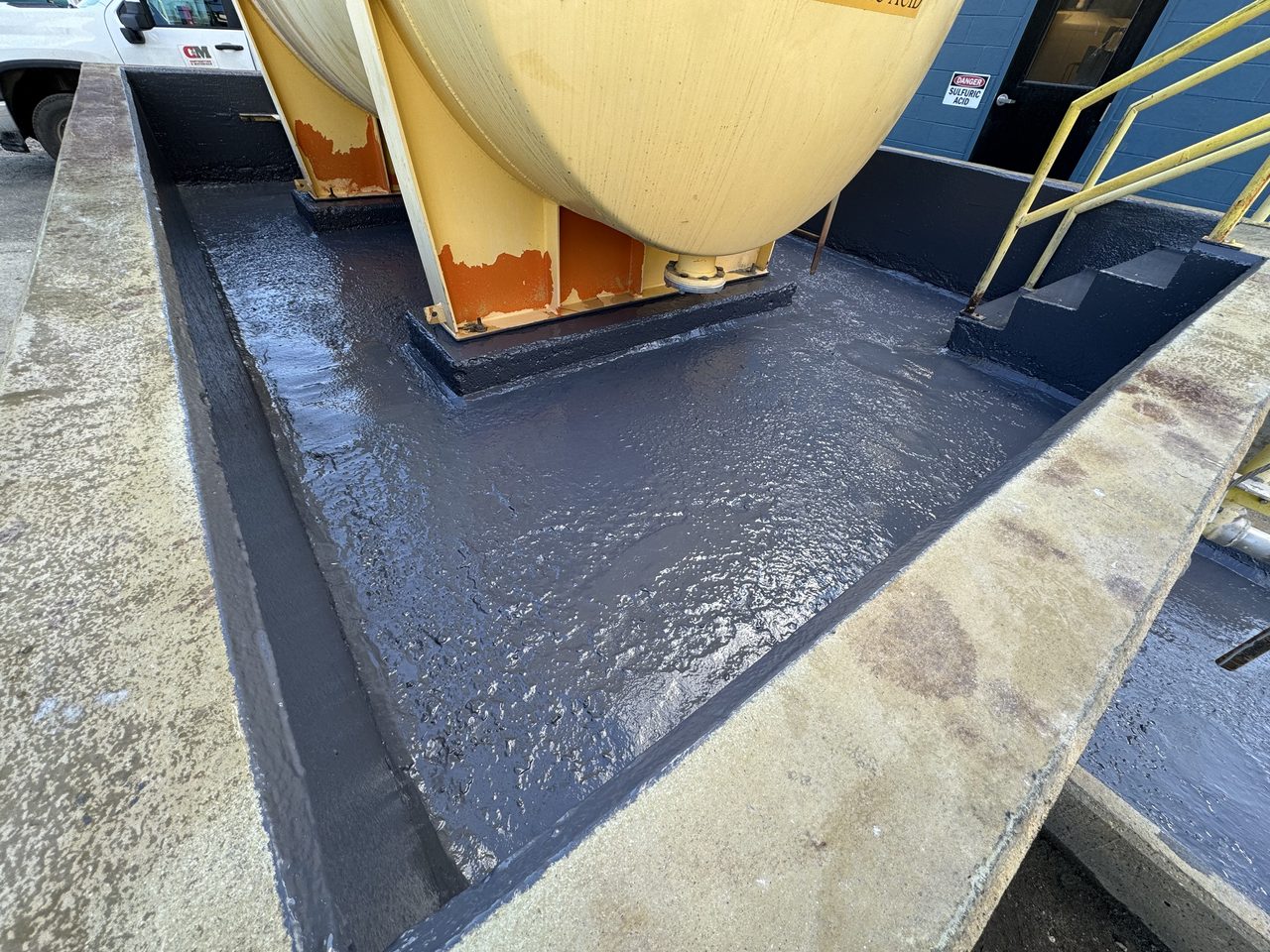
A chemical bund provides secondary containment around tanks and chemical handling areas, helping to contain spills and protect the surrounding environment. However, if the concrete within the bund becomes damaged by chemical attack, the containment itself can become compromised.
Lining a chemical bund with a chemical resistant coating can provide a barrier between the concrete substrate and aggressive chemicals such as acids and alkalis. The correct system depends on the chemicals involved, the condition of the concrete and the exposure conditions.
Why Line a Chemical Bund?
Chemical bunds provide secondary containment, but the concrete or other underlying substrate can deteriorate when exposed to aggressive chemicals. Acid spills, chemical loading and unloading, and prolonged exposure can progressively damage the surface and underlying concrete.
Failed coatings, cracking and general deterioration can further compromise the condition of the bund and its ability to provide effective containment. A suitable chemical resistant lining can help protect the underlying structure from chemical attack and provide a more durable surface for the containment area.
Belzona 4311 (Magma CR1), for example, is a two-part epoxy coating designed to protect concrete and metal surfaces from chemical attack, particularly from acids and alkalis. It has applications including bund areas, chemical spill areas, concrete tank plinths and retaining walls.
How to Line a Chemical Bund
1. Remove Failed Coatings and Repair Damaged Concrete
Existing failed coatings should be completely removed before the new system is applied.
Areas of damaged or deteriorated concrete should be repaired first. Cracks also need to be addressed as part of the repair process rather than simply coating over them.
2. Clean and Prepare the Surface
Remove any chemical contamination by either steam cleaning, high pressure water washing or thorough washing with detergent solution, followed by rinsing with clean water.
The surface should then be mechanically prepared to expose a sound substrate and provide an appropriate surface profile for the coating.
3. Prepare New Concrete
Where new concrete is being laid, it needs to be cured for a minimum of 28 days, after which time any surface laitance should be removed through grit blasting or mechanical scarification.
5. Condition the Concrete
For maximum adhesion, Belzona 4911 (Magma TX Conditioner) should be applied to the prepared surface before the coating application begins. This helps to prepare the porous substrate for the selected coating system.
6. Apply the Chemical Resistant Coating
Depending on the system, application may be carried out using stiff-bristled brushes, squeegees or suitable spray equipment.
The coating needs to be applied at the specified coverage and film thickness, with particular attention paid to edges, junctions and other areas where incomplete coverage could compromise protection.
A second coat may be required depending on the selected system and service conditions.
7. Inspect the Completed Lining
Once the coating has cured sufficiently, the completed lining should be inspected for continuity and defects.
Any pinholes, holidays or areas of incomplete coverage should be repaired in accordance with the relevant product instructions before the bund is returned to service.
Case Study: Chemical Bund Lining
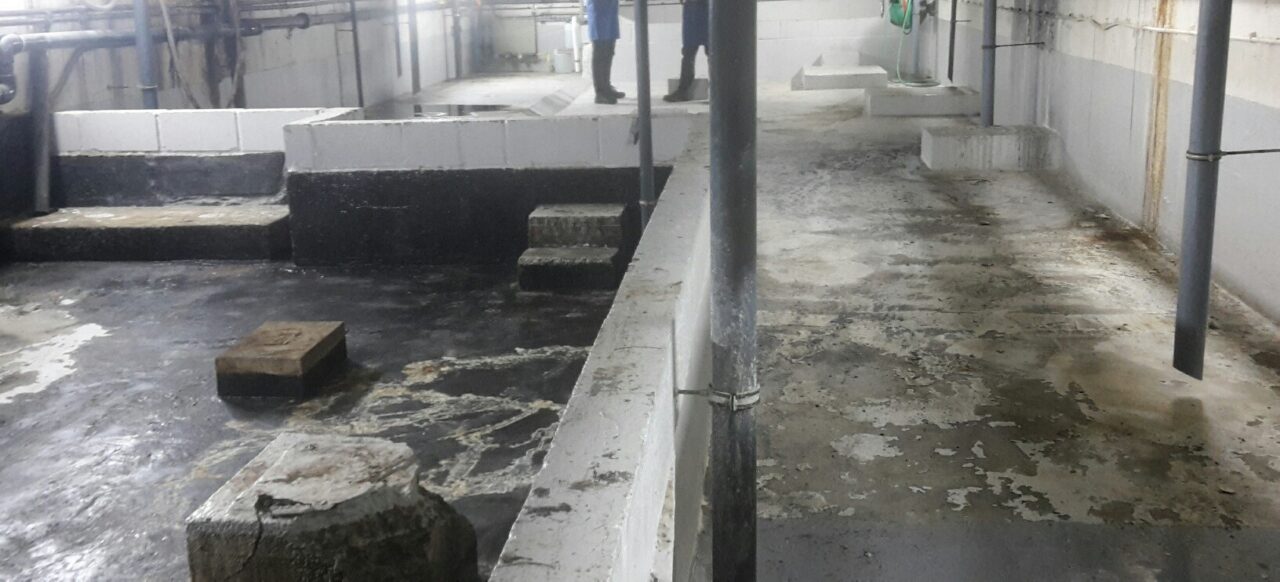
To address the deterioration, the existing coating was removed and the area was prepared before applying Belzona 4911 (Magma TX Conditioner) followed by two coats of Belzona 4311 (Magma CR1). The highly chemical resistant coating provided a protective barrier for the concrete and was selected to withstand potential chemical spillages within the bund.
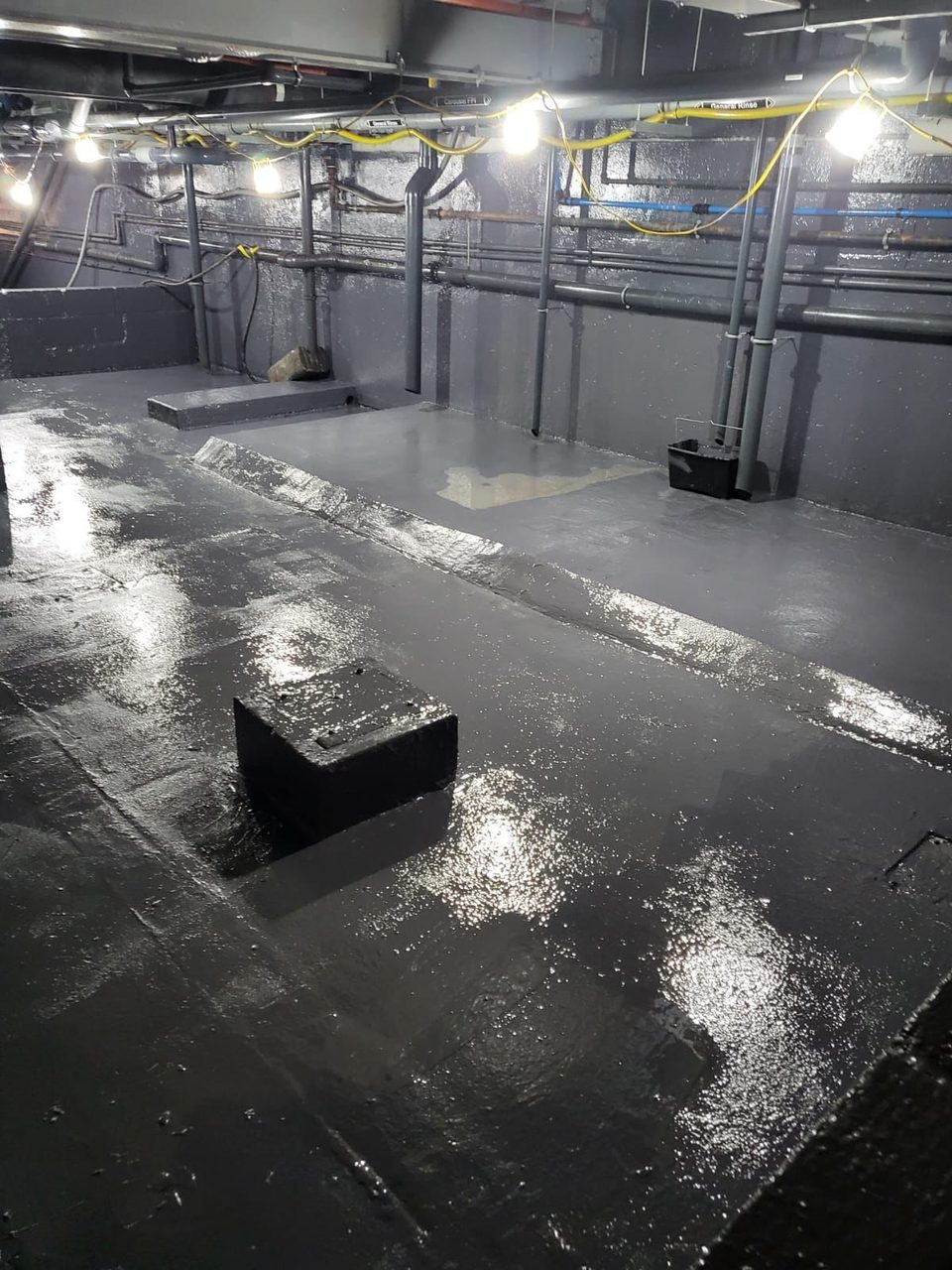
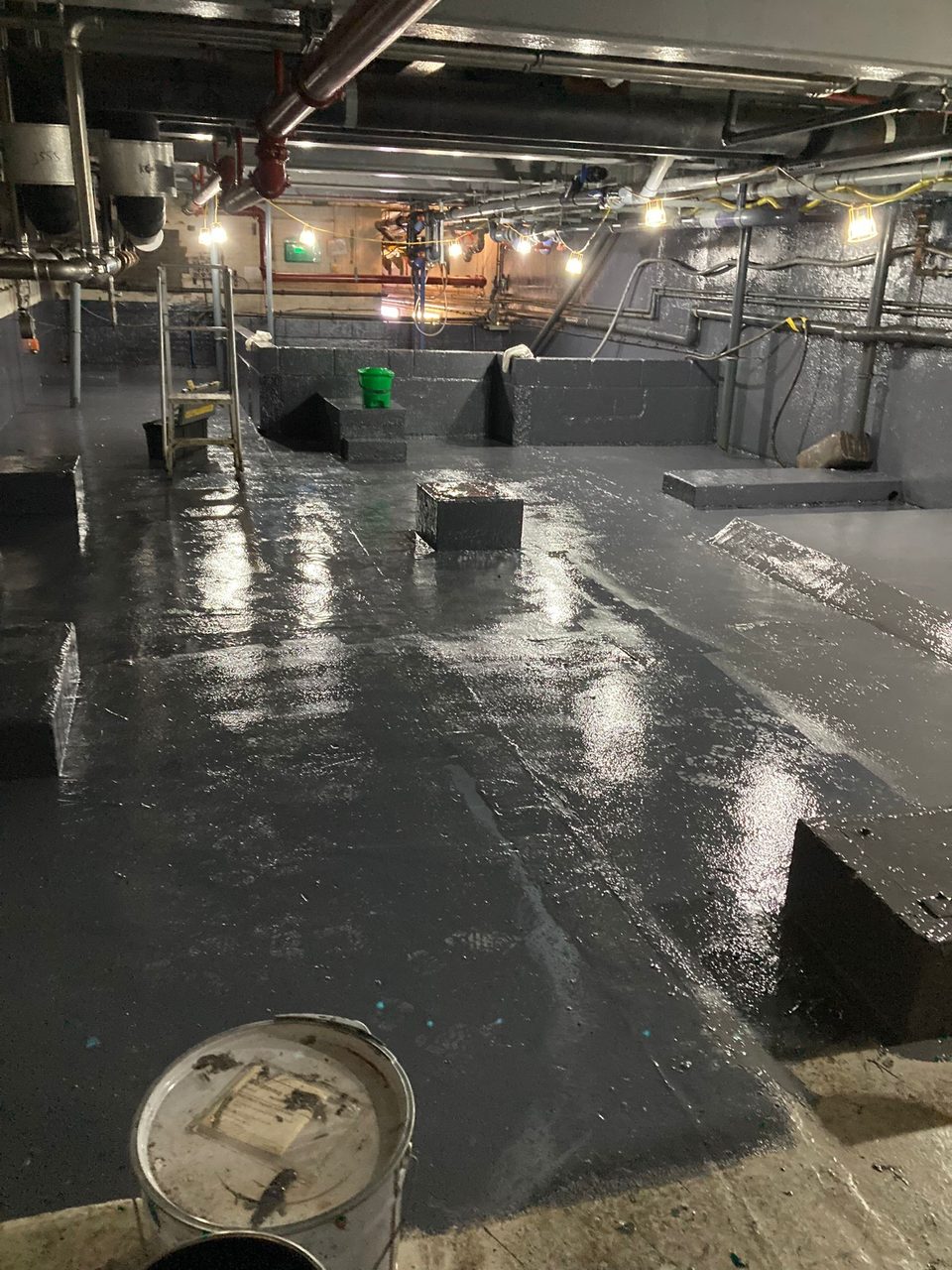
The Customer had previously used the product in other containment areas and a nearby sump and subsequently wanted to extend its use to other facilities.
Frequently Asked Questions
What Chemicals Can a Chemical Bund Lining Resist?
Belzona materials withstand a vast range of chemicals at different temperatures and concentrations. Materials are tested against a
broad range of chemicals. Results are recorded in the chemical resistance chart, made available for each Belzona product expected to come into contact with aggressive chemicals. Belzona 4311, for example, can be applied for continuous immersion service in 98% sulphuric acid, 30% ammonia, sodium hydroxide, fuel oil and many other aqueous and hydrocarbon liquids.
Which Belzona Products Can Be Used for Chemical Resistant Protection?
The appropriate Belzona system depends on the type of chemical exposure and the performance requirements of the application.
Belzona 4311 (Magma CR1) – resistance to a broad range of chemicals.
Belzona 4331 (Magma CR3) – maximum resistance to organic acids and solvents.
Belzona 4341 (Magma CR4) – maximum resistance to hot inorganic acids.
Belzona 4351 – static dissipative coating.
Belzona 4361 – maximum flexibility.
Product selection should take into account the specific chemical, concentration, temperature, exposure conditions and substrate. The relevant product information and Instructions for Use should be consulted when selecting a system for a particular chemical bund application.
How Do You Line a Chemical Bund?
A chemical bund lining project generally involves assessing the chemical exposure, preparing the existing surface, repairing damaged concrete and cracks, applying the appropriate conditioner and installing the chemical resistant coating system.
What Is the Best Chemical Resistant Coating for Concrete?
The appropriate coating depends on the chemical environment and condition of the concrete. Belzona 4311 (Magma CR1) is designed for chemical protection of concrete, while Belzona 4361 provides additional flexibility and crack-bridging properties.
Need Help Selecting a Chemical Resistant Coating?
Click to find a Distributor near you.
Learn More

Rhiannon has been working for Belzona for over 16 years and has recently joined the Marketing Team in a Supervisory role. Her expertise lies in lead generation, social media strategy, content marketing and email campaigns.